
Running payroll for a cannabis business is genuinely one of the harder HR challenges out there right now. Cannabis Payroll Systems have to handle IRC 280E tax requirements, cash-heavy operations, and state-by-state rule changes that never seem to slow down. Limited access to traditional banking makes routine payroll runs anything but routine. After reviewing the field closely, the right system separates businesses that stay compliant from those that face costly mistakes. This guide breaks down the top options worth considering for dispensary teams at any stage of growth.
How the picks were chosen
Each option was assessed by pulling together publicly available information, including user reviews, feature breakdowns, ratings from major software directories, and data found directly on official company websites. Only providers with a verifiable track record handling cannabis HR and payroll were kept on the list.
→ See the full research breakdown
- Hybrid Payroll – Best for small to mid-sized cannabis businesses seeking bundled payroll, HR, and compliance support
- Paycor – Best for SMB HR and payroll management with rapid deployment
- BambooHR – Best for small and medium-sized businesses seeking integrated HR and payroll solutions
- Gusto – Best for mid-market businesses requiring integrated payroll and HR management
- Rippling – Best for mid-market to enterprise employee management and payroll automation
Why Cannabis Payroll Systems Are Worth the Investment
Choosing the wrong payroll system for a cannabis business doesn’t just create headaches. It creates real financial exposure.
IRC 280E disallows standard business deductions, which means every payroll tax calculation has to be handled with extra precision. A system that doesn’t understand that distinction will produce inaccurate filings, and that adds up fast.
Limited banking access makes things harder too. Cannabis operators often run cash-heavy operations, and not every payroll platform is built to handle that reality without friction.
The right system pays for itself through better payroll processing accuracy, on-time delivery for every employee classification, and clean 280E tax liability calculations that hold up under scrutiny.
Honestly, the difference between a purpose-built cannabis payroll tool and a generic workaround shows up most clearly during audits and peak hiring seasons.
Cannabis Payroll Systems: Comparison Table
Note: All data in this table is sourced from review platforms and the official websites of the listed companies.
| Company Name | Years Operating | Team Size | Headquartered In |
| Hybrid Payroll | Est. 2014 | 51-200 employees | Denver, CO |
| Paycor | Est. 1990 | 2,900 employees | Cincinnati, OH |
| BambooHR | Est. 2008 | 1,627 employees | Draper, UT |
| Gusto | Est. 2012 | 4,008 employees | San Francisco, CA |
| Rippling | Est. 2016 | 7,131 employees | San Francisco, CA |
1. Hybrid Payroll – Best for Small to Mid-Sized Cannabis Businesses Seeking Bundled Payroll, HR, and Compliance Support

Which Functions Does Hybrid Payroll Perform?
Hybrid Payroll operates as both a payroll provider and a Professional Employer Organization, meaning they cover payroll processing, tax calculations, compliance management, and co-employment services under one roof. Cannabis payroll solutions for businesses are needed; without piecing together separate tools, they will find their bundled model genuinely practical. Their Denver base and cannabis-specific customization give them a real edge for operators dealing with state-level regulatory requirements on a daily basis.
What’s Hybrid Payroll’s Edge in Cannabis Payroll Systems?
The main problem they solve is the compliance burden that comes with running payroll inside a federally restricted industry, where standard deduction rules don’t apply, and banking access stays inconsistent. Their PEO model means cannabis businesses get payroll accuracy, HR support, and risk management from a single provider that already knows the terrain.
The Review Roundup:
From what the data shows, Hybrid Payroll earns recognition for their personalized service approach and their ability to customize services to industry-specific needs. Clients consistently point to the flexibility of their model as a standout quality. That kind of responsiveness is rare among payroll providers serving regulated industries.
2.Paycor – Best for SMB HR and Payroll Management with Rapid Deployment
Which Functions Does Paycor Perform?
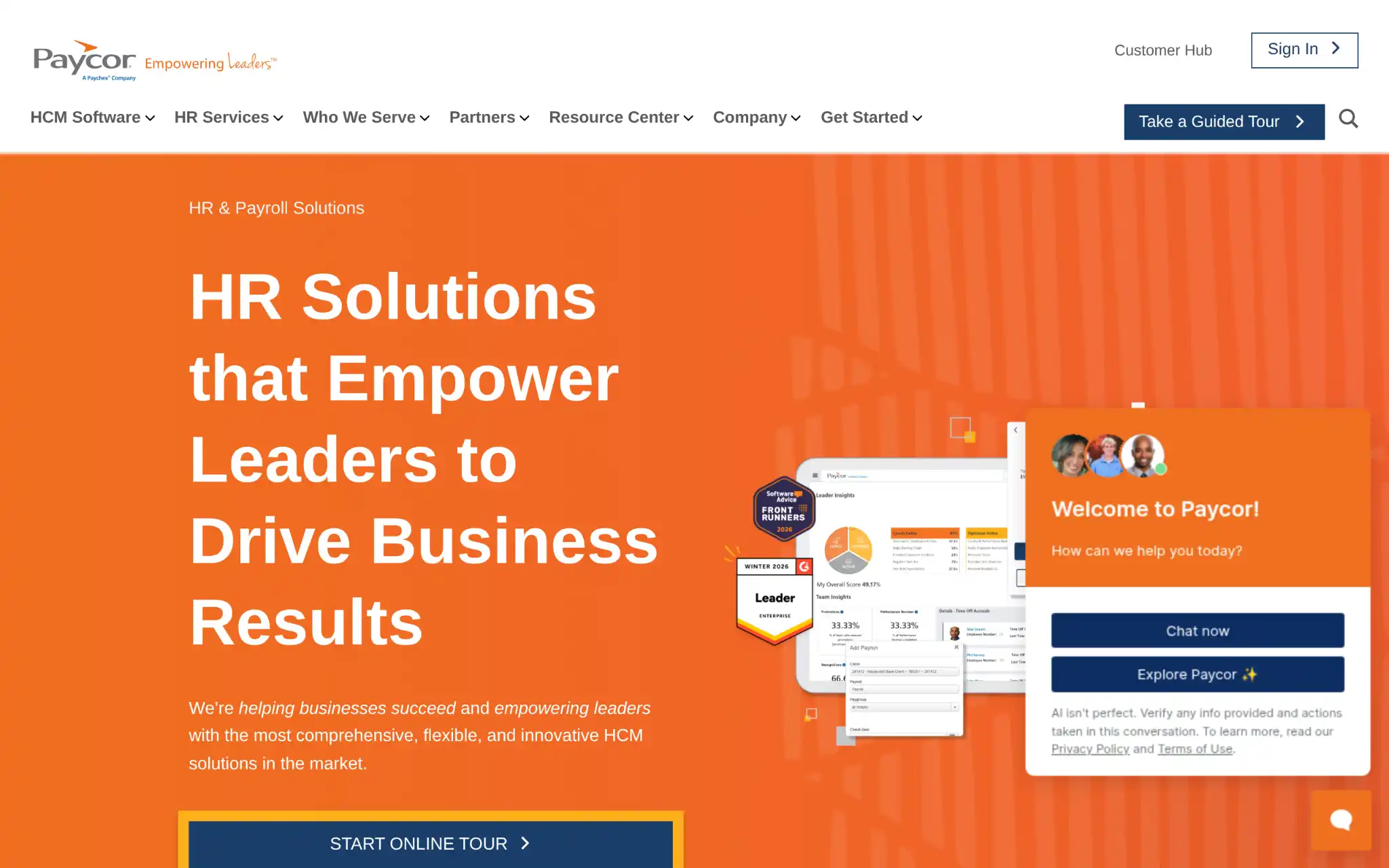
Paycor covers the full HR management stack, from recruiting and hiring through payroll processing, career development, and retention tools. They serve more than 30,000 customers across all 50 states, and their subscription model (priced at $19 to $27 per employee per month) gives smaller cannabis businesses a predictable cost structure. Their analytics and third-party connections make it easier to tie payroll data into other business systems.
What’s Paycor’s Edge in Cannabis Payroll Systems?
Where Paycor separates itself is speed of deployment. They’ve earned recognition for the fastest go-live time in their category, which matters a lot when a dispensary is scaling quickly and needs payroll running before the next hire starts. Their configurable platform lets cannabis operators set up rules and workflows that reflect their specific state licensing requirements without rebuilding the whole system from scratch.
The Review Roundup:
Paycor has pulled in 8 G2 Winter Awards and 13 G2 Summer Awards, which signals consistent satisfaction across a wide user base. Reviewers frequently mention the partnership approach as something that sets it apart from more transactional platforms. From what the reviews show, customers feel supported rather than just processed.
3. BambooHR – Best for Small and Medium-Sized Businesses Seeking Integrated HR and Payroll Solutions
Which Functions Does BambooHR Perform?
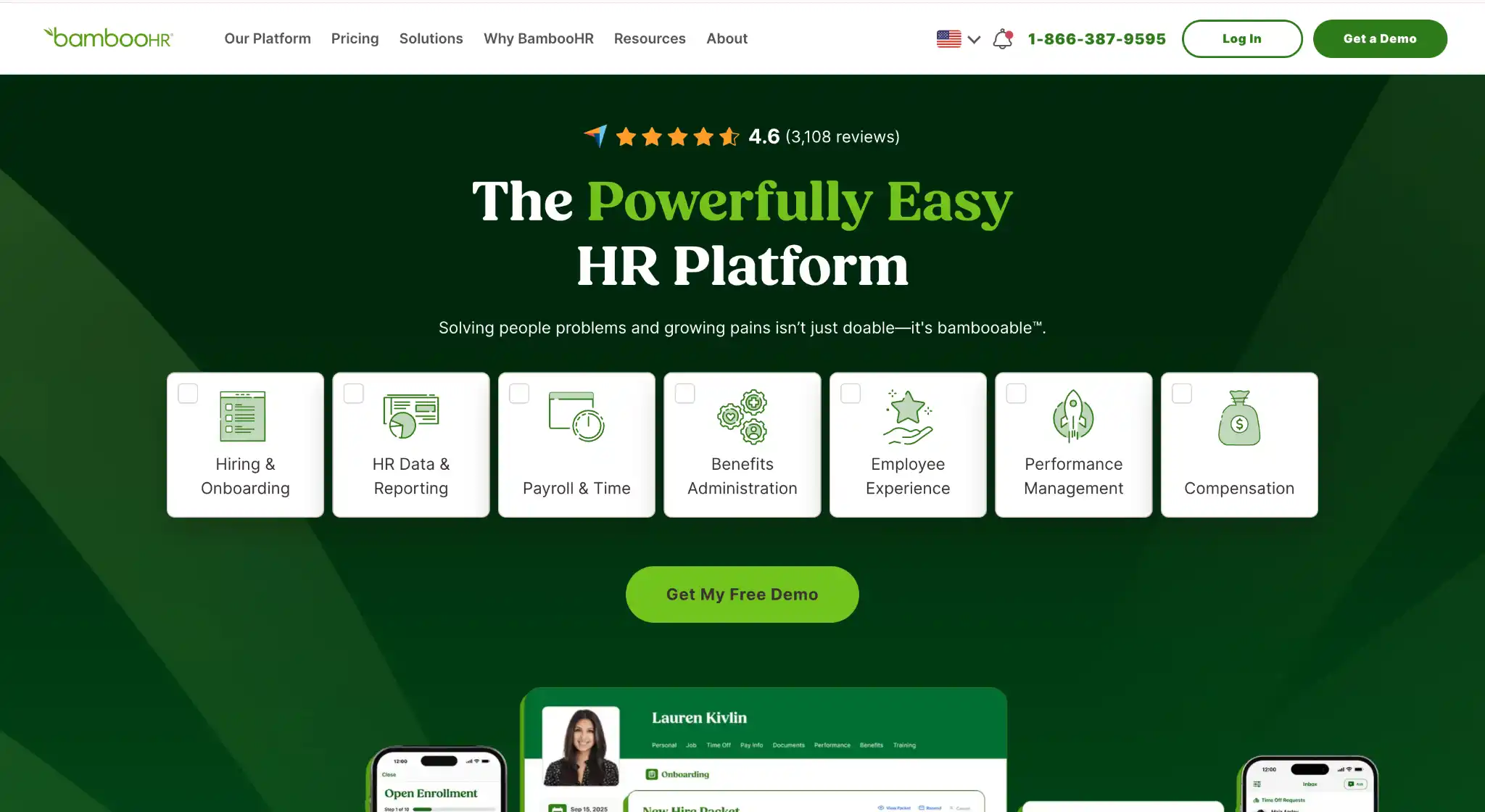
BambooHR delivers a fully connected HR ecosystem that brings together applicant tracking, employee hiring, payroll processing with tax filing, benefits administration, performance management, and time tracking in one place. They serve over 34,000 customers across 190 countries, which shows they’re legitimate at managing multi-jurisdiction demands. Their native app structure means data moves cleanly between modules without manual workarounds, which matters when you’re managing compliance across multiple cannabis license types.
What’s BambooHR’s Edge in Cannabis Payroll Systems?
BambooHR’s strength is the depth of its connected ecosystem, where HR data, payroll data, and benefits data all share a single source of truth rather than sitting in disconnected systems. For cannabis businesses that face high employee turnover in retail dispensary roles, that kind of unified setup cuts the time it takes to onboard new employees and reduces the chance of payroll errors during rapid headcount changes.
The Review Roundup:
BambooHR earned recognition as a 2025/26 Cloud Awards winner in the Best Cloud HR/HRMS Solution category, which reflects strong peer validation. Users consistently highlight how clean and accessible the platform feels, even for non-technical HR staff. From what the reviews show, the unified design is the feature people appreciate most.
4. Gusto – Best for Mid-Market Businesses Requiring Integrated Payroll and HR Management
Which Functions Does Gusto Perform?
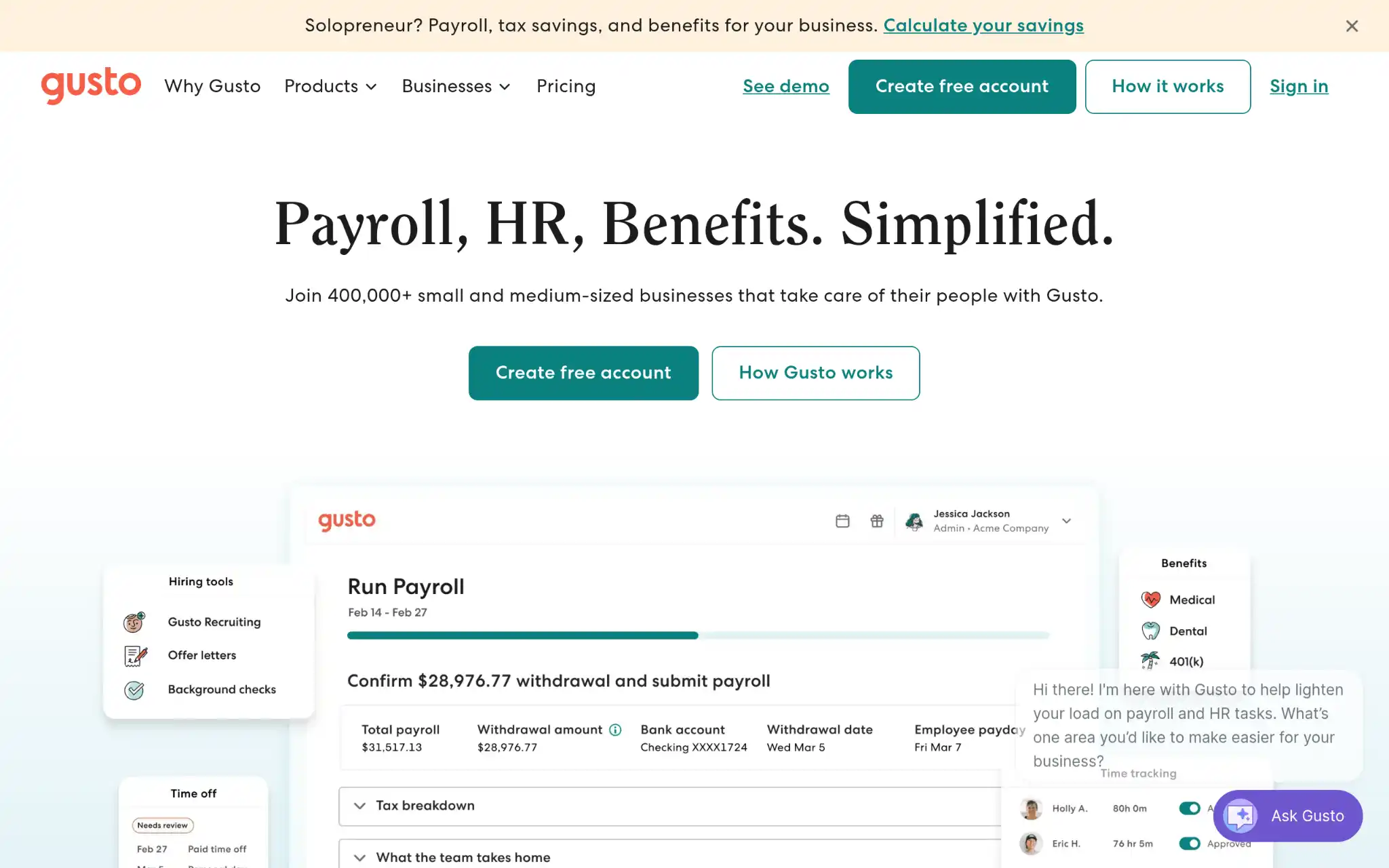
Gusto handles payroll processing, benefits administration, and HR management for U.S.-based businesses, automating payroll tax filing with government agencies at no extra charge. They serve 400,000 customers and connect with nearly 150 third-party software products, which makes it easier to build a tech stack around their platform. For cannabis businesses managing compliance across multiple states with different employment regulations, that automation layer removes a serious amount of manual work.
What’s Gusto’s Edge in Cannabis Payroll Systems?
The platform’s intuitive interface stands out because it makes complex payroll and tax workflows accessible to HR managers who don’t have a deep accounting background, which is common in growing dispensary teams. Their automated tax filing also reduces the risk of late or inaccurate 280E-adjacent filings, keeping cannabis operators on the right side of state and federal requirements.
The Review Roundup:
Gusto has earned “Best Overall Payroll Processing Software” recognition from TechRepublic and hit the top spot for satisfaction on G2’s 2026 review rankings (not cheap to build, but worth every year of product investment they’ve made). Reviewers consistently call out the platform’s ease of use as the reason they stay. From what the reviews show, that accessibility isn’t just a feature. It’s the whole value.
5. Rippling – Best for Mid-Market to Enterprise Employee Management and Payroll Automation
Which Functions Does Rippling Perform?
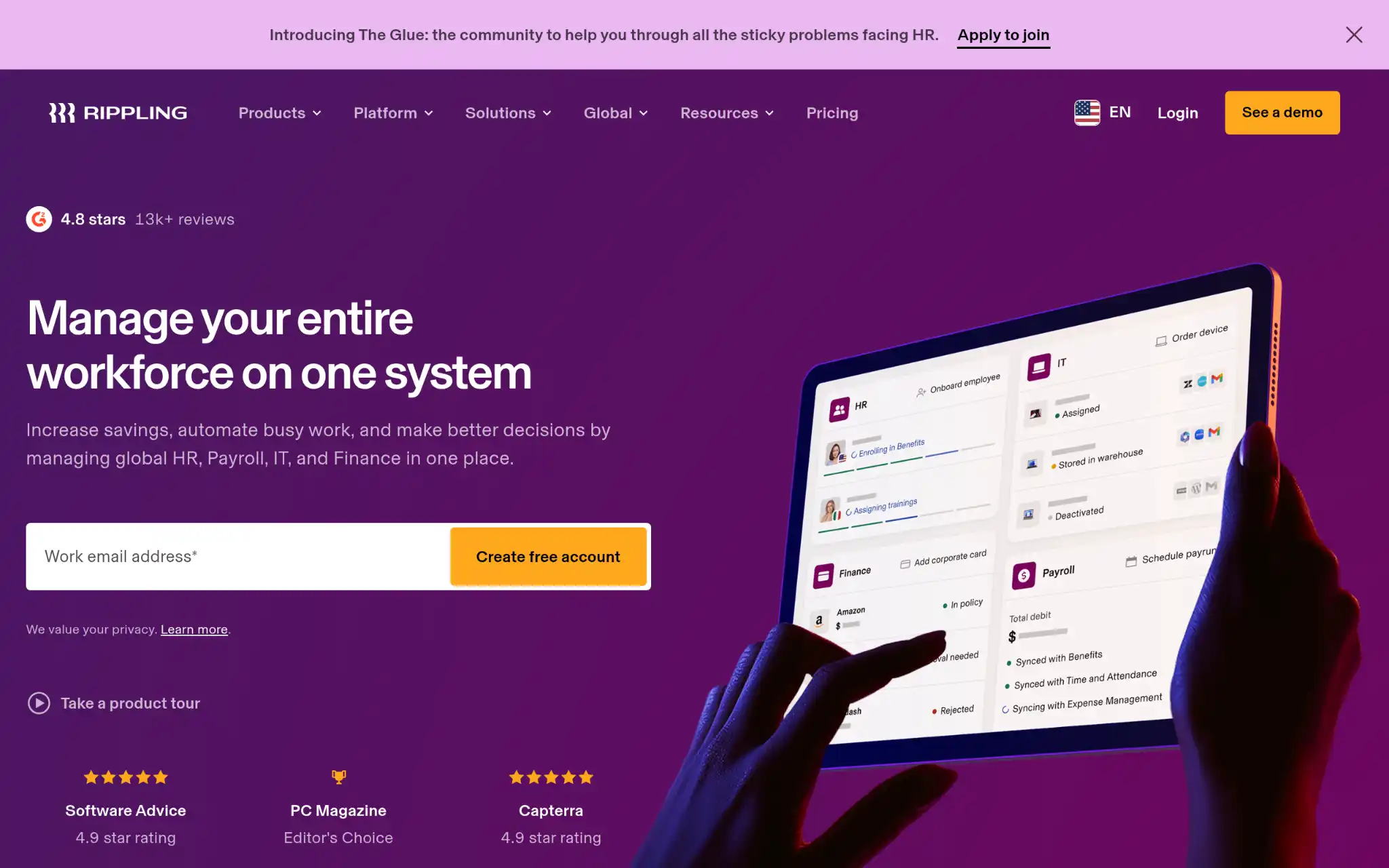
Rippling automates the full employee management lifecycle, from payroll and benefits to device setup and app provisioning, all built on a single employee data record. They connect with 500-plus applications and can fully onboard a new hire in 90 seconds (which sounds like a marketing claim until you realize how many systems that actually touches). For cannabis businesses with high dispensary turnover, that speed directly improves on-time payroll delivery for new employees.
What’s Rippling’s Edge in Cannabis Payroll Systems?
Rippling’s ability to manage multi-state payroll compliance from a single employee record solves one of the most frustrating problems for cannabis operators running licenses across multiple jurisdictions. Their recognition as the number one payroll provider for mid-market on G2, based on feedback from over 10,000 HR professionals, shows the platform holds up at scale.
The Review Roundup:
Rippling has earned 40 Voice of the Customer awards and sits at number four globally in G2’s 2026 Software Awards (think enterprise-grade product with a serious customer base behind it). Reviewers highlight the depth of automation and the speed of deployment as the top reasons for switching. From what the reviews show, the breadth of connections is what keeps larger cannabis organizations from outgrowing the platform.
Selection Framework: How Each Pick Was Evaluated
Building this list required more than a quick scan of software review sites. The goal was to identify payroll providers that genuinely fit the operational and regulatory demands of cannabis businesses, not just general HR platforms that happen to accept cannabis clients.
Data Collection
The starting point was a broad sweep of information gathered from software directories, HR technology review platforms, and official company websites. Case studies, feature documentation, and publicly available pricing structures were pulled together to build a working picture of each provider. The longlist was intentionally wide at this stage to avoid excluding options that might be less well-known but still highly relevant to cannabis payroll operations.
Filtering Candidates by Relevant Criteria
From that longlist, providers were assessed against a set of baseline requirements. Any company that lacked verifiable customer feedback, transparent service details, or a clear record of operating in payroll or HR technology was removed. Review patterns were studied for consistency, since a handful of strong reviews tells a very different story than sustained positive sentiment across hundreds of user accounts. Providers with inconsistent or unverifiable claims were filtered out at this stage.
Checking Accuracy Against Source Material
Every claim found on a company’s website was cross-referenced against independent review data and third-party sources. Where a company described specific capabilities, customer counts, or industry recognition, those points were checked against what actual users reported. This step helped surface gaps between marketing language and real-world performance, which matters a lot when the stakes involve payroll tax accuracy under IRC 280E and state cannabis employment law.
Industry Standing Check
Recognition from respected industry bodies, software award programs, and business publications was factored into the evaluation. Companies that appeared consistently across multiple credible sources, whether through award acknowledgments, analyst mentions, or editorial coverage, were weighted more favorably than those with a thin public footprint. That kind of repeated validation across independent sources is a strong signal of sustained quality.
Real-World Cannabis Payroll Systems Evidence
The final check focused on cannabis industry relevance. Dedicated service pages addressing cannabis payroll tax compliance and state regulatory adherence, verified reviews from cannabis operators, and case studies showing results in cannabis HR contexts all contributed here. Providers that could show specific awareness of Schedule I federal classification and banking access limitations for cannabis businesses were given extra consideration. A platform may perform well for general small business payroll, but the cannabis context requires a different level of awareness, and the final list reflects that.
Choosing the Right Cannabis Payroll Systems: A Quick Guide
Picking the right cannabis payroll system comes down to matching your operational reality with a platform that actually understands the regulatory environment you’re working in. Here are the five areas worth examining before you commit.
- Industry/Domain Experience: Look for providers that have built cannabis-specific features or worked with licensed operators. General payroll experience is a starting point, but cannabis payroll tax compliance and state regulatory adherence require more than standard configuration.
- Features and Service Options: Confirm the platform covers your actual workflow needs, including multi-state payroll, tax filing, employee hiring, and benefits administration. The more gaps you fill with workarounds, the higher your error risk.
- Pricing Structure: Understand what you’re paying per employee per month and what’s included versus billed separately. Some platforms look affordable upfront but charge for every additional module (not cheap once you add it all up).
- Results Measurement: Ask how the platform tracks payroll processing accuracy and on-time payroll delivery. Providers that surface this data proactively are the ones taking performance seriously.
- Industry Knowledge and Compliance: Confirm the provider understands IRC 280E, FLSA, and the cannabis employment laws specific to your operating states. A team that knows these rules cold is worth far more than a platform that just automates generic payroll.
Wrapping Up
Cannabis payroll isn’t something to leave to a generic platform and hope for the best. The businesses that get it right are choosing systems built with a real understanding of IRC 280E, multi-state cannabis employment law, and the banking realities that come with operating in a federally restricted space. Whether you’re running a single-location dispensary or a multi-state operation, the right system protects your team and keeps your business audit-ready. The cannabis HR technology space will keep growing, and the providers that specialize here will only get sharper.