
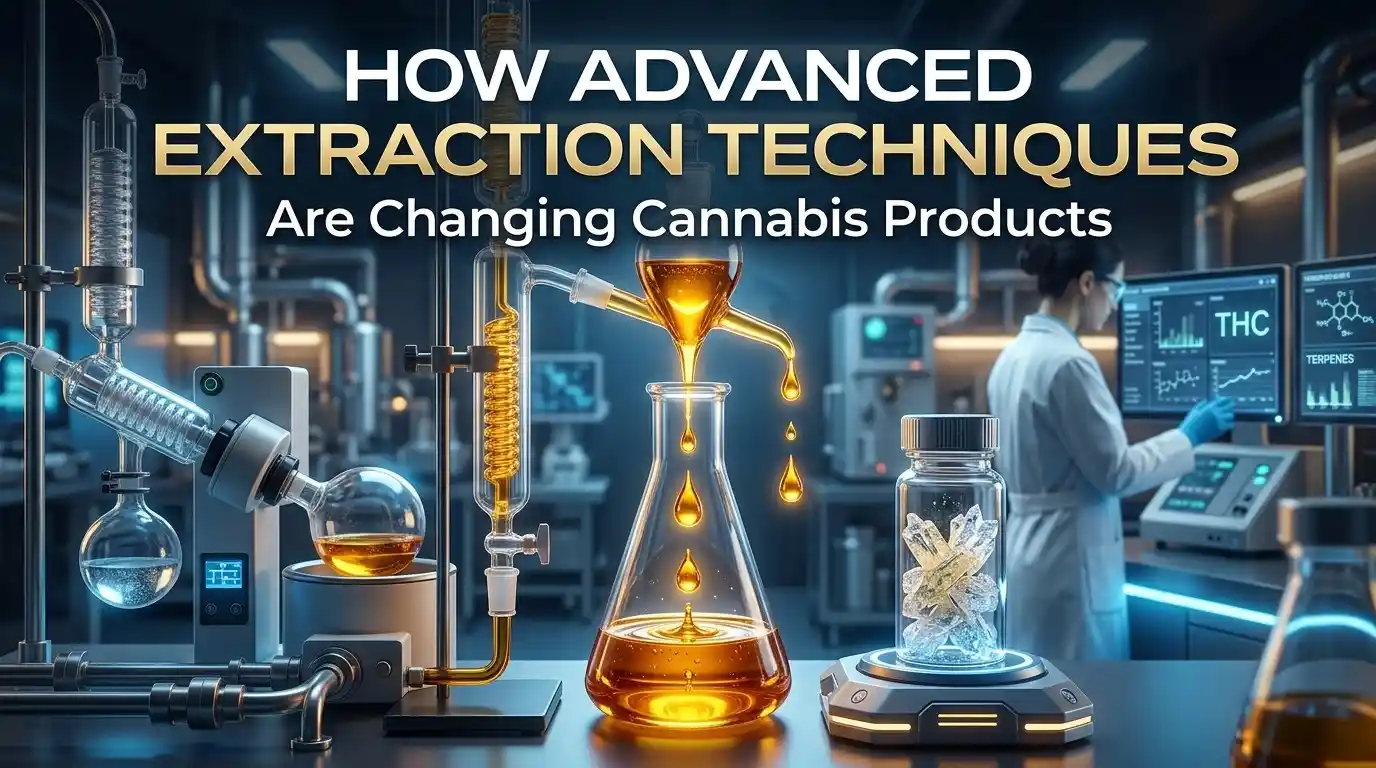
The cannabis industry has grown far beyond simple plant material. Today, extraction science plays a central role in how cannabinoids are studied, processed, and understood at a molecular level. As analytical methods improve, researchers and producers alike are gaining a clearer picture of what happens when raw plant matter is broken down into its individual chemical components.
This shift toward precision extraction is not just a manufacturing trend. It reflects a broader move within the industry toward better quality control, more consistent testing standards, and a deeper scientific understanding of plant chemistry.
The Science Behind Modern Cannabis Extraction
Extraction is the process of separating desired compounds, such as cannabinoids and terpenes, from the rest of the plant material. Early methods were often crude, relying on basic solvents and minimal filtration. Modern techniques, by contrast, are built on principles borrowed from pharmaceutical and analytical chemistry.
Laboratories now use equipment capable of isolating specific molecules with a high degree of accuracy. This allows for consistent batch testing, which is essential for research purposes and regulatory compliance. Precision extraction also reduces the presence of unwanted residues, a key concern in any laboratory setting focused on chemical purity.
Solvent-Based vs Solventless Methods
Solvent-Based Extraction
Solvent-based methods use substances like ethanol, butane, or carbon dioxide to pull cannabinoids away from plant fibers. Each solvent interacts differently with the plant matrix, which affects the final composition of the extract.
Carbon dioxide extraction, for example, is widely used in analytical settings because it allows for tunable pressure and temperature control. This gives researchers more predictable outcomes when studying specific cannabinoid profiles.
Solventless Methods
Solventless techniques rely on mechanical or thermal processes instead of chemical solvents. Rosin pressing and ice water separation are two common examples. These methods are often chosen when researchers want to avoid any risk of solvent residue in a sample.
Both approaches have distinct advantages depending on the research objective, whether that involves studying terpene stability, cannabinoid degradation, or extract purity over time.
Why Purity and Precision Matter in Analytical Research
Purity is one of the most important variables in cannabinoid research. Even small amounts of contamination can alter test results, making it harder to draw accurate scientific conclusions. This is why standardized extraction protocols have become a focus across the industry.
Distillation, in particular, has become a widely referenced process for achieving high-purity cannabinoid isolates. In discussions about supply consistency for research and formulation purposes, sources like Bulk Delta 9 Distillate in Canada are often referenced as an example of how standardized distillate products are categorized and sourced within a regulated market. This kind of categorization helps illustrate how the industry organizes extracts based on purity level and intended analytical use.
The Role of Distillation in Cannabinoid Isolation
Distillation is a refinement step that follows initial extraction. It uses heat and vacuum pressure to separate cannabinoids based on their individual boiling points. This process removes plant lipids, waxes, and chlorophyll, leaving behind a more concentrated and chemically stable compound.
Short-path distillation is one of the more advanced techniques used in laboratory environments. It operates under low pressure, which reduces the temperature needed to vaporize cannabinoids. This helps preserve molecular integrity, an important factor when researchers need consistent samples for comparative analysis.
Emerging Techniques Shaping the Industry
New extraction methods continue to emerge as researchers explore more efficient and environmentally sustainable options.
- Supercritical fluid extraction, which fine-tunes pressure and temperature for selective compound isolation
- Chromatography-based purification, used to separate closely related cannabinoids with high accuracy
- Cold ethanol extraction, valued for preserving terpene profiles during processing
- Fractional distillation, which allows for more granular separation of cannabinoid classes
These techniques are often discussed in academic and industry literature when comparing product categories, including references such as Bulk Delta 9 Distillate in Canada, which serve as practical examples of how distillate classification works within a broader analytical framework.
As instrumentation becomes more affordable, smaller laboratories are gaining access to tools once reserved for large-scale operations. This is helping standardize testing methods across the industry.
Responsible Research Considerations
Anyone working with cannabinoid extracts, whether in an academic, analytical, or industrial laboratory setting, should follow strict safety and handling protocols. This includes:
- Using properly ventilated and certified laboratory equipment
- Following regional regulatory guidelines for handling controlled substances
- Documenting extraction parameters for reproducibility
- Verifying purity through third-party laboratory testing
- Avoiding any use outside of approved research or regulatory contexts
Responsible research practices ensure that extraction science continues to develop in a way that is transparent, safe, and scientifically sound.
Conclusion
Extraction technology has reshaped how the cannabis industry approaches product development and scientific study. From solvent-based systems to advanced distillation and chromatography methods, each technique offers researchers new ways to understand cannabinoid chemistry with greater accuracy.
As the field continues to mature, the emphasis on purity, consistency, and responsible laboratory practice will likely remain at the center of future innovation. For students, researchers, and industry professionals alike, understanding these extraction fundamentals provides a solid foundation for interpreting how modern cannabis products are analyzed and classified.
FAQs
1. What is the main purpose of cannabis extraction? Extraction separates cannabinoids and terpenes from raw plant material, allowing for more precise laboratory analysis and standardized testing.
2. What is the difference between solvent-based and solventless extraction? Solvent-based methods use chemical solvents like ethanol or CO2, while solventless methods rely on mechanical or thermal processes without any added chemicals.
3. Why is distillation important in cannabinoid research? Distillation refines extracted compounds by removing impurities like waxes and chlorophyll, resulting in a more concentrated and stable sample for study.
4. Is short-path distillation different from standard distillation? Yes. Short-path distillation operates under lower pressure and temperature, which helps preserve the molecular structure of sensitive compounds during separation.
5. How do researchers verify the purity of a cannabis extract? Purity is typically confirmed through third-party laboratory testing, which analyzes the sample for cannabinoid concentration and the presence of any contaminants.
External References
- National Institutes of Health (NIH) – Cannabinoid research publications: https://www.ncbi.nlm.nih.gov/
- PubMed – Peer-reviewed studies on cannabis extraction methods: https://pubmed.ncbi.nlm.nih.gov/
- ScienceDirect – Research on supercritical fluid and solvent extraction techniques: https://www.sciencedirect.com/
- National Institute of Standards and Technology (NIST) – Analytical chemistry standards: https://www.nist.gov/
- Nature – Published research on cannabinoid chemistry and isolation methods: https://www.nature.com/
Disclaimer: This article is intended for educational and informational purposes only. It does not constitute medical advice, promote any specific product, or provide guidance on dosage, treatment, or human use. All information should be independently verified through authoritative scientific and regulatory sources.