
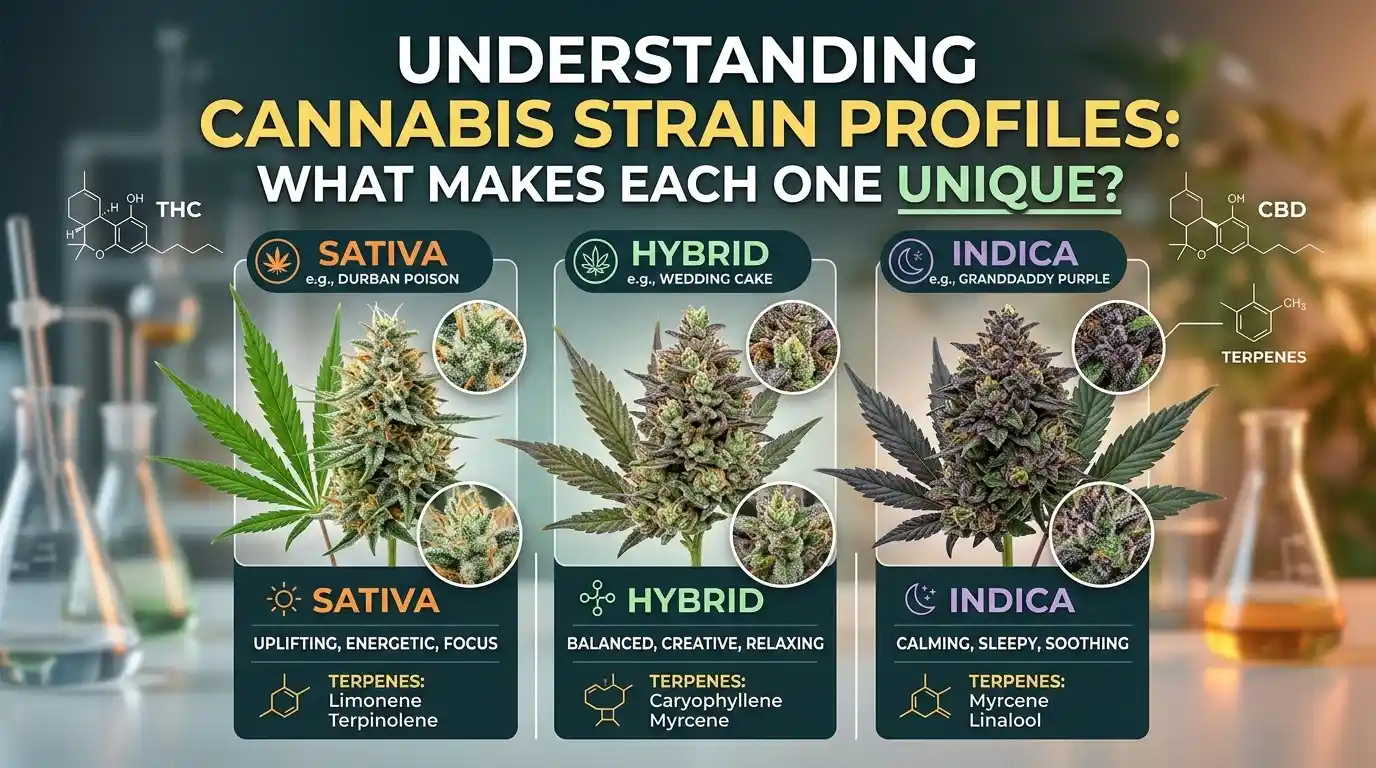
Cannabis has become one of the most studied plants in modern botany and chemistry. As research expands, so does public curiosity about why different cannabis strains look, smell, and grow so differently from one another. Understanding strain profiles is not just useful for horticulturists and researchers. It also helps consumers, growers, and students of plant science make sense of a rapidly evolving industry.
This article breaks down what a cannabis strain profile actually means, the science behind plant variation, and why these differences matter from an educational and research standpoint.
What Is a Cannabis Strain Profile?
A strain profile refers to the combination of traits that define a particular cannabis variety. These traits include:
- Plant structure and growth pattern
- Terpene composition (the compounds responsible for aroma)
- Cannabinoid ratios
- Flowering time
- Climate and soil preferences
No two strains are identical, even within the same broad category. This is because cannabis, like many plants, has been selectively bred over decades to emphasize certain characteristics.
Genetic Lineage Matters
Every strain traces back to a genetic lineage, often a cross between two or more parent plants. Breeders document these lineages carefully, since even small genetic shifts can change how a plant grows, smells, or responds to its environment.
Researchers studying plant genetics often compare this process to selective breeding seen in agriculture more broadly, where traits are refined generation after generation for consistency and predictability.
The Role of Terpenes in Strain Identity
Terpenes are aromatic compounds found throughout the plant kingdom, not just in cannabis. They are responsible for the wide range of scents associated with different strains, from citrus and pine to earthy or floral notes.
Each strain has its own terpene fingerprint, which is one reason two plants with similar cannabinoid content can smell and feel completely different. Laboratories now use gas chromatography to map these terpene profiles with scientific precision, similar to methods used in food science and perfumery research.
Common terpenes studied in cannabis include:
- Myrcene, often linked to earthy or musky aromas
- Limonene, associated with citrus notes
- Pinene, known for a sharp pine scent
- Caryophyllene, which has a peppery or spicy character
Sativa, Indica, and Hybrid Classifications
The traditional grouping of cannabis into sativa, indica, and hybrid categories originated from early botanical observations of plant shape and growth habits rather than chemical composition.
- Sativa plants are typically taller with narrow leaves and longer flowering cycles.
- Indica plants tend to be shorter and bushier with broader leaves.
- Hybrids combine traits from both categories through selective crossbreeding.
Modern researchers note that these classifications describe morphology more accurately than they describe chemical effects, since cannabinoid and terpene content can vary widely within each category. This is part of why people exploring different varieties often research specific strain data before deciding what to grow or study further. For those comparing options, resources that let you Buy Sativa Weed Online often include strain-specific information that reflects this growing emphasis on transparency.
Environmental Influence on Strain Expression
Genetics set the foundation, but environment plays a major role in how a strain ultimately expresses itself. Factors such as soil composition, humidity, light exposure, and temperature can all influence:
- Terpene concentration
- Plant height and density
- Flowering speed
- Overall yield
This phenomenon, often referred to as genotype-environment interaction, is well documented in plant biology research. It explains why the same strain grown in two different regions can present noticeably different characteristics.
Why Cultivation Data Matters for Research
Documenting cultivation conditions alongside strain genetics allows researchers to build more accurate models of plant behavior. This data is increasingly used in agricultural science to understand crop resilience and adaptability, applications that extend well beyond cannabis alone.
Cannabinoid Ratios and Analytical Testing
Alongside terpenes, cannabinoid ratios contribute significantly to a strain’s overall profile. Laboratories analyze these ratios using high-performance liquid chromatography, a method widely used in pharmaceutical and analytical chemistry research.
This type of testing provides consistent, replicable data that supports transparency in both commercial and academic settings. Platforms that offer detailed lab reports, including those where consumers can Buy Sativa Weed Online, reflect a broader industry shift toward evidence-based labeling standards.
Why Strain Diversity Matters for Research and Education
Studying strain diversity contributes to a larger understanding of plant adaptability, breeding techniques, and chemical variation. Botanists and agricultural scientists use cannabis as a case study for:
- Selective breeding outcomes
- Terpene and cannabinoid biosynthesis
- Environmental adaptation research
- Genetic mapping techniques
This growing body of research also supports responsible, science-based conversations about plant biology rather than assumptions based on outdated stereotypes about strain categories.
Responsible Research Considerations
Anyone studying cannabis strain profiles, whether as a student, grower, or industry professional, should rely on verified laboratory data and peer-reviewed research rather than anecdotal claims. Strain names alone do not guarantee consistent chemical composition, since naming conventions are not standardized across regions or producers.
Cross-referencing lab results, understanding testing methodologies, and recognizing the limitations of self-reported data are all part of sound research practice in this field.
Conclusion
Cannabis strain profiles are shaped by a combination of genetics, environment, and chemical composition. Terpenes and cannabinoid ratios work together to create the distinct characteristics associated with each variety, while classifications like sativa and indica offer a starting point rooted in plant morphology rather than precise chemical data.
As analytical testing becomes more accessible, understanding these profiles offers a clearer, more scientific way to appreciate plant diversity. For students, researchers, and curious growers alike, this knowledge forms a foundation for more informed and responsible engagement with the subject.
Frequently Asked Questions
1. What determines a cannabis strain’s aroma? Aroma is primarily determined by terpenes, aromatic compounds that also occur in many other plants. Different terpene combinations create the wide variety of scents found across strains.
2. Are sativa and indica classifications based on chemical composition? No. These classifications are traditionally based on plant morphology, such as height and leaf shape, rather than cannabinoid or terpene content.
3. Can the same strain grow differently in different locations? Yes. Environmental factors like soil, climate, and light exposure can significantly affect how a strain expresses its genetic traits.
4. How do researchers test cannabinoid content? Laboratories commonly use high-performance liquid chromatography to measure cannabinoid ratios with scientific accuracy.
5. Why is strain naming inconsistent across producers? There is no global standardization for strain naming, which means identical names can sometimes refer to genetically different plants.
External References
- World Health Organization: Cannabis and cannabis resin fact sheet
- National Institutes of Health (NIH): Cannabis research overview
- PubMed: Peer-reviewed studies on cannabis terpene and cannabinoid profiling
- ScienceDirect: Research on plant genotype-environment interactions
- Nature: Studies on plant secondary metabolite biosynthesis
Disclaimer
This article is for educational and informational purposes only. It does not constitute medical advice, and it does not promote or endorse the use of any controlled substance. Readers should consult applicable local laws and regulations and refer to verified scientific and governmental sources for further information.